

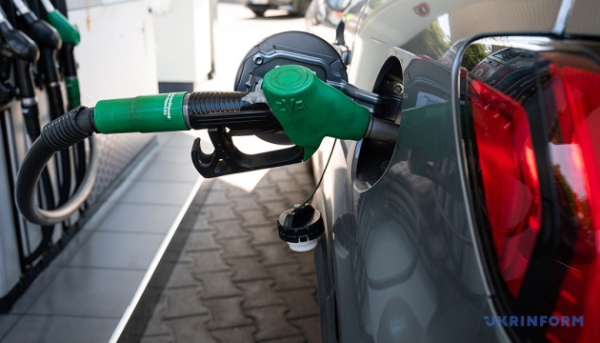
Thanks to domestic liquid biofuel production, Ukraine can replace up to 30% of imported diesel fuel
According to the Ministry of Economy’s forecasts, if the active phase of confrontation in the Middle East drags on, Ukrainian farmers may increase rapeseed sowing by a third – to 1.5 million hectares. This is one of the most common types of raw materials for producing alternative fuel – biodiesel. Currently, the volumes of such fuel production in Ukraine are meager. The lion’s share of domestically grown rapeseed is exported, where it is used to produce the same liquid biofuel and other high-value-added products. Another part is processed into oil for the food industry or for biodiesel production needs in Europe. It seems that the current problems with traditional fuel are a good opportunity to change the situation and develop this segment in our country. What is needed for this?

BIOFUEL USE IS ABOUT ECOLOGY AND EUROPEAN INTEGRATION
Even during periods of relatively low oil prices, the share of liquid biofuel in the global fuel market has steadily increased. By 2030, it is projected to grow from the current 4-4.5% to 15%. And fuel crises like the current one will only accelerate the growth rate of this segment. The USA, Indonesia, Brazil, China, and EU countries are actively increasing the production and use of fuel blends with biofuel additives. Over 60 countries have already introduced mandatory requirements for biofuel content in fuel. In some places, there are bans or fines for using pure diesel in transport.
In Europe, first-generation liquid biofuel (biodiesel and bioethanol) has been used for a long time and actively. Many consumers there, when choosing fuel, pay attention not only to its cost but also to its environmental friendliness. Unlike Ukraine, where, given the low income levels of people and, partly, environmental awareness, the price has always been the determining factor.
Moreover, the use of fuel blends with bio-components is mandatory in the European Union. According to EU legislation, the share of alternative diesel fuel in the market must be at least 5.2-12.6% (depending on the country). Therefore, for our neighbors, production clusters where liquid biofuel manufacturing enterprises are located near oil refineries to minimize logistics costs are common.
Bioethanol (technical ethyl alcohol with minimal moisture content, produced from sugar and starch-containing crops and grains – mainly corn, wheat, barley, sugar beets, and cane) is added to gasoline at refineries. Biodiesel, produced from vegetable oil (most commonly palm, rapeseed, soybean, and sunflower) or animal fat using methyl or ethyl alcohol as a reactant, is added to diesel fuel. The most common blends contain 5% and 10% bio-components (E5 and E10 (ethanol) and B5 and B10 (biodiesel)).
The use of biodiesel significantly reduces carbon dioxide emissions from internal combustion engines, and there are no sulfur dioxide emissions at all. If such fuel gets into water or soil, it will have practically no impact on the environment – in a few weeks, it will almost completely decompose into harmless bio-components.
Transport in the EU is largely adapted to using biodiesel or blends with a high content of it. New vehicles are adapted to such fuel right off the assembly line. In the case of older vehicles, it involves modernizing fuel systems, installing special filters, and replacing rubber parts that quickly deteriorate under the action of biofuel. In Ukraine, you cannot fill up with biodiesel or a blend with a high content of it in every car. And the need to re-equip transport is one of the obstacles to the wider use of this type of fuel.
There are other drawbacks. For example, pure biodiesel (like bioethanol) is not used at temperatures below +5℃ because it thickens quickly. The problem is solved by adding special additives, but this is an additional cost, making such fuel uncompetitive in price even at the current “sky-high” fuel costs in Ukraine. On the other hand, adding 5-10-20% biodiesel to conventional fuel is a rather promising option: the higher cost of biodiesel does not significantly affect the overall price of the blend, no additives are needed, and such fuel can be used at any temperature.
The EU’s share in global biofuel production exceeds 25%. This involves producing 13-15 million tons of fuel annually. The leaders in production volume are Germany, Spain, and France. This sector is also developing rapidly in Poland and the Czech Republic. Moreover, European producers purchase a significant portion of the raw materials for producing bioethanol and biodiesel (primarily corn and rapeseed) in Ukraine. This means we are also quite important participants in the production chain in this segment of the fuel market. The only problem is that it concerns the supply of raw materials. Our country’s share in the production of high value-added products is negligible. Therefore, the increased interest in biofuel use amidst the current rise in global hydrocarbon prices is a good opportunity to increase its production in our country as well.
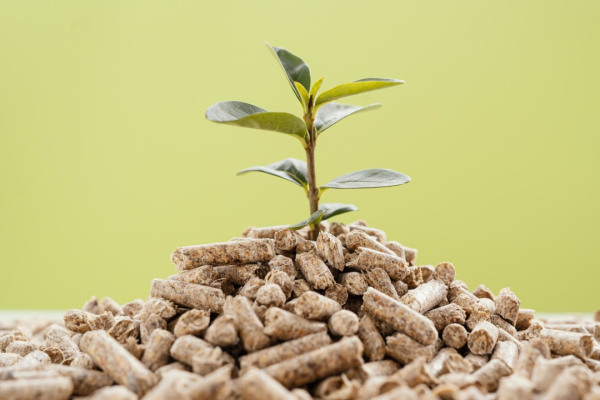
THE BIOFUEL MARKET IN UKRAINE HAS BEEN DEVELOPING FOR A LONG TIME, BUT VERY SLOWLY
Perhaps it will surprise someone, but the first attempts to establish the production of alternative diesel fuel in Ukraine are already over 20 years old. Back in 2005, the German company Bio Company Raps opened the first biodiesel production facility from rapeseed in our territory. And in the Ternopil and Kherson regions, gas stations with biofuel appeared.
Here we even outpaced some European neighbors. It’s another matter that there has been no talk of progressive development in this segment until recently: business interest in producing such fuel here has appeared and disappeared.
Since the cost of producing liquid biofuel, despite technological advancements, remains high, interest in its production is primarily fueled by price surges in conventional fuel. Analysts have found that the threshold price is a crude oil price of $100 per barrel. During periods when “black gold” cost more for a long time, Ukraine undertook the development of bioethanol and biodiesel production capacities – even exclusively for its own needs. However, due to the lack of additional incentives, as soon as oil quotes fell below “a hundred,” interest sharply decreased.
The problem lies precisely in this dependence on the price conjuncture in global hydrocarbon markets. The periods of price increases and decreases alternate too often, and oil quotes react too sharply and unpredictably to all sorts of geopolitical and economic challenges. To change the situation and ensure the development of the liquid biofuel production industry, a comprehensive state-level approach is needed – by establishing clear “rules of the game,” simplifying permitting, certification, and other bureaucratic procedures, and providing tax and other incentives.
Steps have already been taken in terms of bioethanol production and use. Since May 1, 2025, a legal norm has been in effect regarding the mandatory content of bioethanol (bio-components) in gasoline – at least 5%. The requirement does not apply to gasoline with an octane rating of 98 and higher, as well as fuel supplied for the needs of the Ministry of Defense and the State Reserve. A regulatory framework for the technical regulation of commercial circulation of fuels with added bioethanol for gasoline engines has been approved.
Such legislative, regulatory, and technical regulation for the biodiesel market is still ahead. One of the visible obstacles to establishing mass production of this fuel is the high excise tax, which, like for conventional diesel, has been set at 253.8 euros per 1000 liters since January 1, 2026. Considering that the production cost of traditional diesel fuel, despite high raw material prices, is lower than that of fuel produced from plant or animal raw materials, investments in biodiesel become risky.
But reducing the excise tax on this type of fuel (even if the government and parliament are willing) is not so simple. After all, changing excise taxes on petroleum products is one of Ukraine’s obligations within the framework of European integration. The phased increase in excise rates, which began in 2024 and will continue until 2028, is an important step towards aligning our legislation with EU norms (Council Directive 2003/96/EC).
A more realistic option for stimulating the industry would be to adopt legislation on the mandatory content of biodiesel in diesel fuel – at the level of the same 5-10% as for gasoline and bioethanol. Obviously, an attempt at such an innovation will cause some resistance – both from fuel market participants and consumers, and, of course, from some politicians. After all, potentially – at least at the first stage – it will lead to a slight increase in the prices of fuel blends.
On the other hand, if such a step makes investments in biodiesel production more attractive, and Ukraine develops the appropriate production infrastructure, it will significantly reduce the impact of turbulence in global fuel markets, such as the current crisis. Plus, hundreds of such enterprises scattered across the country are much harder for the enemy to destroy than a large oil refinery. Moreover, establishing processing facilities in regions with mass cultivation of oilseeds will save on raw material transportation costs, and also protect farmers from potential problems in export markets, ensuring that all the seeds they grow are purchased.
Although it is understandable that we will not be able to completely abandon the use of conventional diesel even in the long term, Ukraine is entirely capable of significantly reducing its dependence on its import supplies.
So, let’s move on to the numbers.
According to the forecasts of the Deputy Minister of Economy, Environment, and Rural Affairs of Ukraine, Taras Vysotskyi, already during the upcoming autumn sowing campaign, domestic farmers may increase winter rapeseed sowing by approximately 400,000 hectares. This means at least 1 million tons of rapeseed.
From the raw material grown on 1 hectare, approximately 1 ton of biodiesel can be produced. That is, we are talking about an additional potential of about 400,000 tons of biofuel. Considering that our total biodiesel needs are estimated at about 1.68 million tons, it seems quite good. By processing additionally grown rapeseed domestically, we can indeed significantly reduce our dependence on imported petroleum products.
But… this is currently only in dreams. After all, the raw material needs to be processed somewhere. And there are problems with this (we mean within the country). Although in previous periods of increased interest in biodiesel production, 14 large biodiesel plants with a total capacity of 300,000 tons per year were built here, they could not be launched at full capacity. The same applies to several dozen smaller enterprises, which in the best-case scenario are used by owners to meet their own farm needs, and mostly stand idle.
Thus, the average annual biodiesel production volumes in Ukraine do not exceed 60-70 thousand tons. There is no talk of 400,000 tons.
High export prices for rapeseed are also not in favor of domestic production. It is more profitable for farmers to ship raw materials to the EU than to bother with establishing their own seed processing. For example, currently in Europe, our rapeseed is bought for more than 500 euros per ton.
Among the obstacles to increasing biodiesel production in Ukraine, analysts also mention the generation of glycerin as a by-product, which is difficult to dispose of (it’s necessary to think about how to maximize its use in the cosmetic and medical fields), the lack of state standards for alternative diesel fuel market products in Ukraine, and what has already been mentioned – the non-mandatory nature (unlike bioethanol) of using biodiesel as part of petroleum products. Questions regarding the purchase of excise components for biodiesel production also need to be regulated.
A separate topic is production certification. The procedure is extremely complex and lengthy.
“I submitted about 300 documents to obtain a fuel production license. I obtained an commissioning act for the biodiesel plant from the State Inspectorate of Architecture and Urban Planning of Ukraine, and for this, an environmental impact assessment and dozens of other documents are required,” says farmer from Lviv region, **Ivan Kilhаn**, whose enterprise received the first biodiesel production license in Ukraine last May, in a comment to **latifundist.com**.
But the capacity of this enterprise is relatively small – the plan is to produce about 250 tons of fuel per day (around 90,000 tons per year). Whereas, according to analysts’ calculations, the country needs to have at least ten plants with a total capacity of 500,000 tons of biodiesel per year. Their construction requires at least 500 million euros in investments. The difficulty in attracting such funds is another of our major problems.
By resolving this issue, as well as making decisions to stimulate the production and use of biodiesel, Ukraine, according to expert conclusions, could significantly reduce its dependence on imported diesel fuel. After all, by establishing domestic processing of rapeseed, soybeans, and technical oil, which we currently export to the EU, we can replace up to 30% of traditional diesel imports.
Vladislav Obukh, Kyiv